
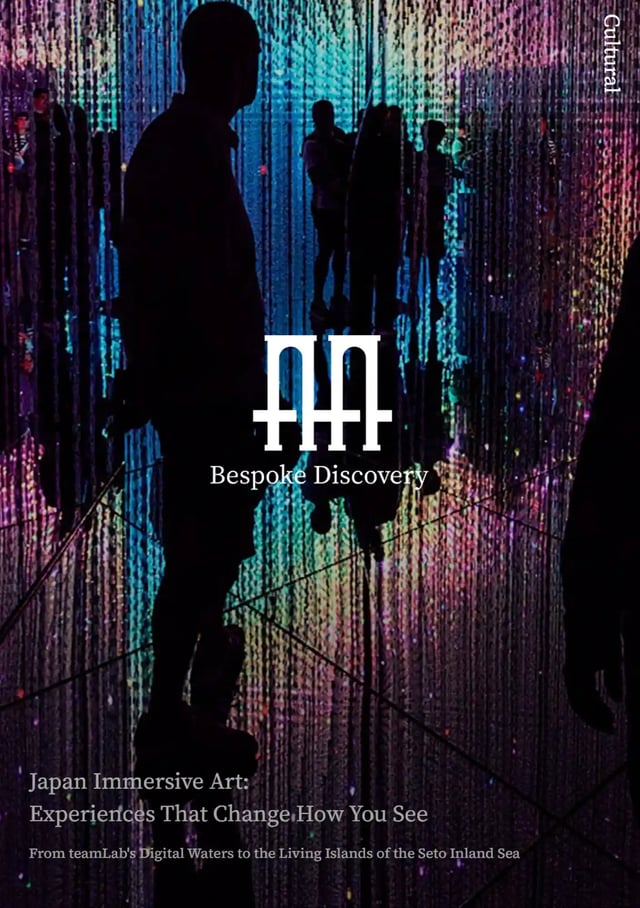
Japan Immersive Art: Experiences That Change How You See
Digital Guide
Performing Arts Cultural

Japan Immersive Art: Experiences That Change How You See

Japan has built one of the world's most concentrated landscapes for immersive art — digital light that responds to your footsteps, islands that are open-air museums, gardens that reorder your thoughts. From teamLab's barefoot waters in Tokyo to the Seto Inland Sea's art islands and Kyoto's Zen gardens: for travelers who seek depth, not sights.

Free, instant download. No spam — unsubscribe anytime.

What's Inside

01

Chapter 1 — The Philosophy Behind Japan's Immersive Art Movement

02

Chapter 2 — teamLab Planets TOKYO — Where the Body Becomes the Canvas

03

Chapter 3 — teamLab Borderless — A Museum Without Walls or Maps

04

Chapter 4 — Naoshima and the Seto Inland Sea — Islands That Are Themselves

05

Chapter 5 — Teshima, Inujima, and Shodoshima — Deeper Into the Archipelago

06

Chapter 6 — Kyoto's Zen Gardens and the Aesthetics of Stillness

07

Chapter 7 — Planning Your Immersive Art Journey — Logistics, Stays, and

A Glimpse Inside

3 of the guide's 7 chapters, previewed.
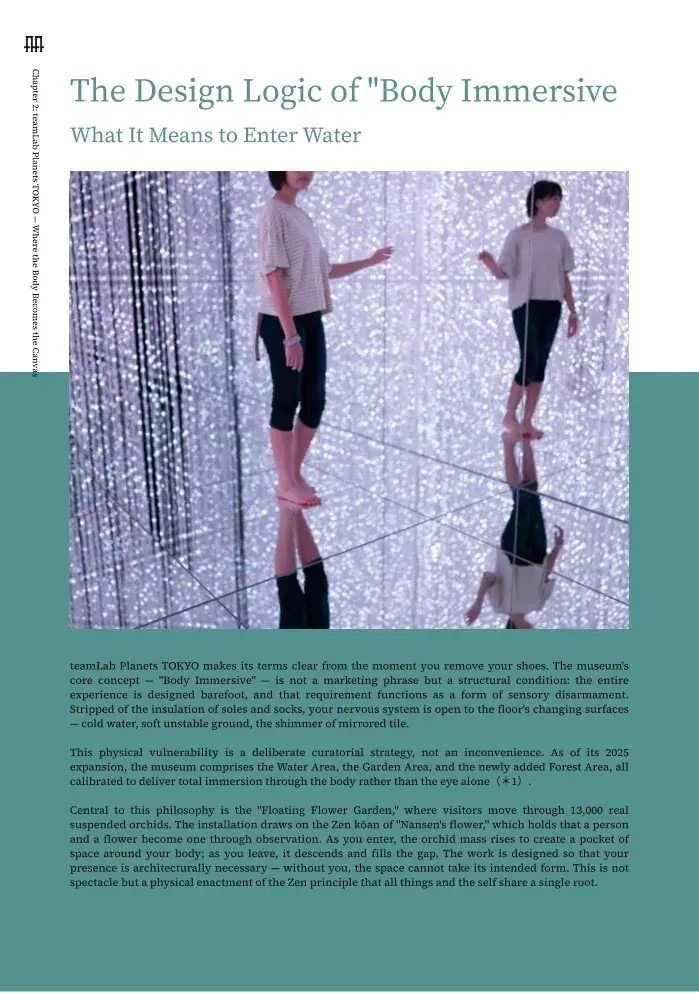
Chapter 2 — teamLab Planets TOKYO — Where the Body Becomes the Canvas
02

teamLab Planets TOKYO — Where the Body Becomes the Canvas

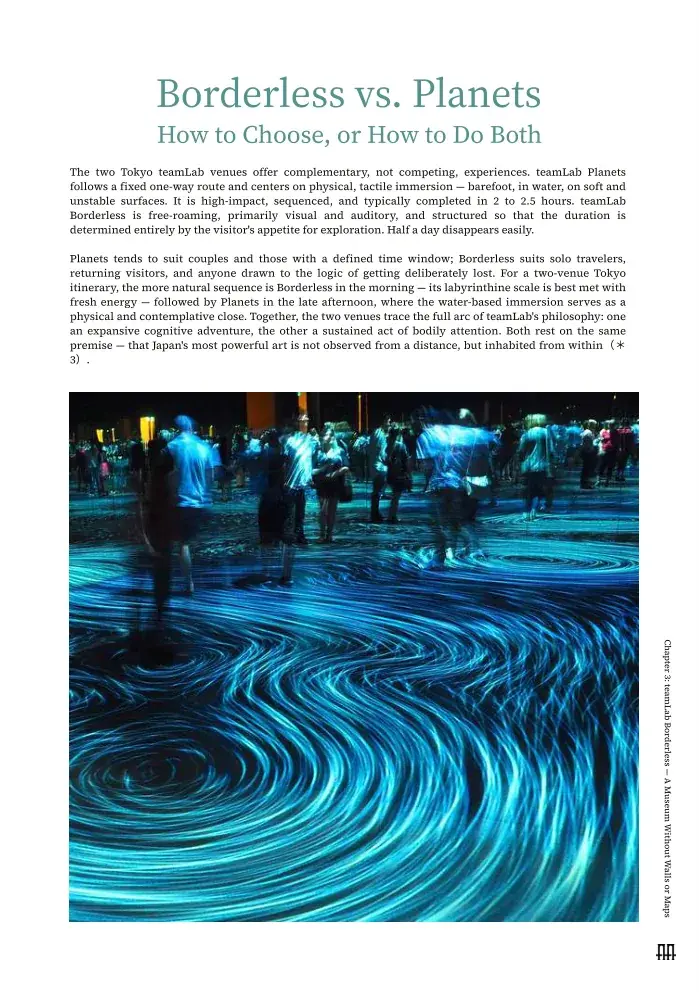
Chapter 3 — teamLab Borderless — A Museum Without Walls or Maps
03

teamLab Borderless — A Museum Without Walls or Maps

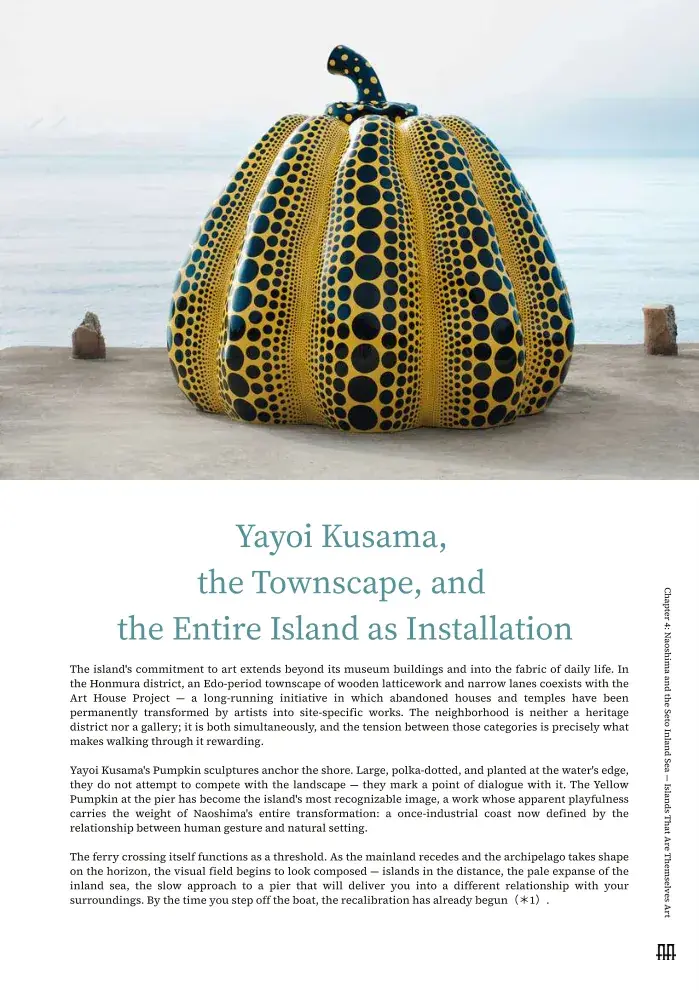
Chapter 4 — Naoshima and the Seto Inland Sea — Islands That Are Themselves
04

Naoshima and the Seto Inland Sea — Islands That Are Themselves

What Readers Say

I came to this guide expecting practical information and left with something closer to a shift in perspective. The sections on karesansui gardens and the philosophy of ma articulated something I had felt in Japan but never quite found the language for — that stillness is not absence but presence of a different kind. Understanding wabi-sabi not as an aesthetic trend but as a genuine worldview chang

Amanda Tan (Australia)

Few travel guides acknowledge what this one does so clearly: that the Japanese approach to hospitality is not a service model but a moral framework. The concept of omotenashi—anticipating need before it is expressed—reframes the entire guest-host relationship in ways that Western hospitality has yet to absorb. Reading about the geometry of seclusion, the engineered silence, the invisible circulati

Robert Ward (USA)
Free Download

Get the Guide

Tell us where to send it. The guide arrives by email, and nothing else follows unless you ask.

By downloading, you agree to receive occasional emails from Bespoke Discovery. Unsubscribe anytime.