

background_Anniversary

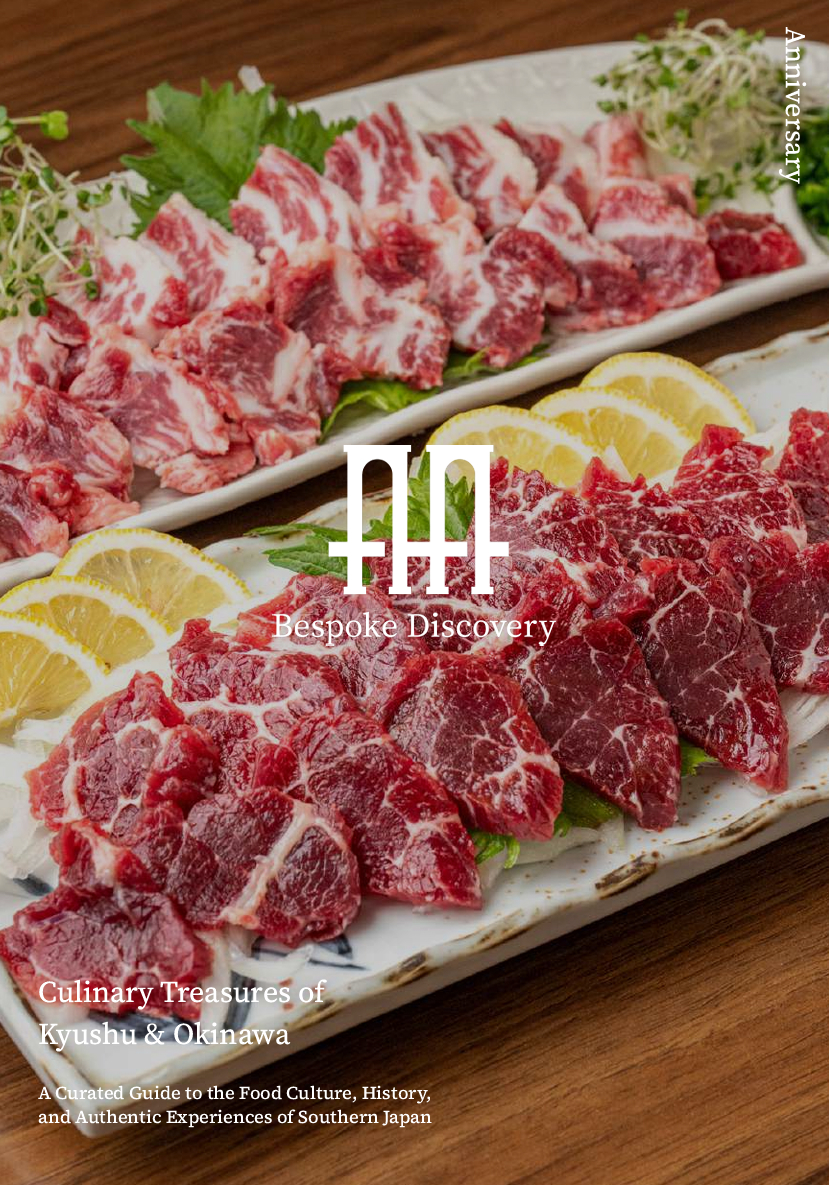
Culinary Treasures of Kyushu & Okinawa
Food Okinawa Kyusyu
A refined culinary guide to southern Japan, exploring Kyushu and Okinawa through food, history, and place. Discover how sea routes, volcanic landscapes, and island cultures shaped regional cuisines, offering travelers a deeper, more meaningful way to understand Japan through taste.
Culinary Treasures of Kyushu & Okinawa

Experiences You’ll Get from This Guide

Step into Fukuoka’s vibrant food scene, where yatai stalls and humble dishes reflect centuries of exchange. This chapter explores how everyday meals reveal the city’s openness, energy, and cultural depth.
RegionalCuisineKyushuOkinawaEdition_01

Fukuoka: Where Streets Tell Culinary Stories

Explore Okinawa’s food culture through the lens of the Ryukyu Kingdom. This chapter reveals how trade, spirituality, and island ecology shaped a cuisine rooted in longevity, balance, and openness to the world.

RegionalCuisineKyushuOkinawaEdition_02

Southern Landscapes That Shape Flavor

From coastal terraces to volcanic terrain, southern Japan’s landscapes define how food is grown, cooked, and shared. Discover how geography and climate quietly shape the tastes of Kyushu and Okinawa.
RegionalCuisineKyushuOkinawaEdition_03

Okinawa: Cuisine Shaped by the Sea and History

Explore Okinawa’s food culture through the lens of the Ryukyu Kingdom. This chapter reveals how trade, spirituality, and island ecology shaped a cuisine rooted in longevity, balance, and openness to the world.

Trusted Information

text text text text text text text text text text text text text text text text text text text text text text text text text text text text text text text text text text text text text text text text text.
tea ceremony master
Taro Yamada
Taro Yamad is an acclaimed Master of the Urasenke Tea Ceremony. He teaches the profound art of Chanoyu in Kyoto and shares the spirit of wabi-sabi globally through demonstrations and lectures.
tea ceremony master
Taro Yamada
Taro Yamad is an acclaimed Master of the Urasenke Tea Ceremony. He teaches the profound art of Chanoyu in Kyoto and shares the spirit of wabi-sabi globally through demonstrations and lectures.
tea ceremony master
Taro Yamada
Taro Yamad is an acclaimed Master of the Urasenke Tea Ceremony. He teaches the profound art of Chanoyu in Kyoto and shares the spirit of wabi-sabi globally through demonstrations and lectures.

Testimonials

Discover what readers from around the world are saying about our guides. Each comment reflects a unique journey into the heart of Japanese culture — from refined traditions and craftsmanship to the quiet beauty found in everyday rituals.

Reading this guide transformed the way I think about taste. Understanding the histories behind Kyushu’s broths or Okinawa’s island ingredients didn’t just add information—it sharpened my senses. Meals became conversations with land, craft, and time. After finishing the guide, I found myself planning my trip differently: seeking markets instead of just restaurants, choosing regions for their stories as much as their flavors. Knowing why a dish exists deepened the pleasure of eating it. This guide doesn’t separate knowledge from enjoyment—it proves that cultural understanding is what turns food into a truly memorable experience.

Amanda Tan(Australia)

What struck me most was how familiar these traditions felt, even from the other side of the world. Reading about Okinawan mixing culture or Fukuoka’s street food, I saw clear echoes in Melbourne—our ramen bars, izakaya-inspired dining, and the way Japanese aesthetics shape modern food culture here. The guide helped me trace those influences back to their origins, grounding trends I see every day in real histories and philosophies. It made me more conscious of how Japanese culture is adapted, respected, and sometimes simplified abroad—and reminded me why going to the source still matters.

Helena Joe(USA)

This guide quietly changed my perspective. By explaining the patience behind slow broths, the humility embedded in resourceful cooking, and the calm dialogue between nature and craft, it reframed everyday dishes as expressions of values. I realized how often I had admired Japanese food without fully appreciating the virtues it embodies. After reading, I felt a deeper respect—not only for the cuisine, but for the mindset it reflects. The guide invites contemplation rather than consumption, and in doing so, it encouraged me to approach both travel and daily life with greater attentiveness and restraint.

Solene(France)

Sneak Peek Inside the Guide

You can read the first few pages as a preview.
To read the full version, please register using the form.

Scroll
Preview
Scroll
Preview