
Planning Japan for 2027? Speak to a travel designerReplies personally within three business days
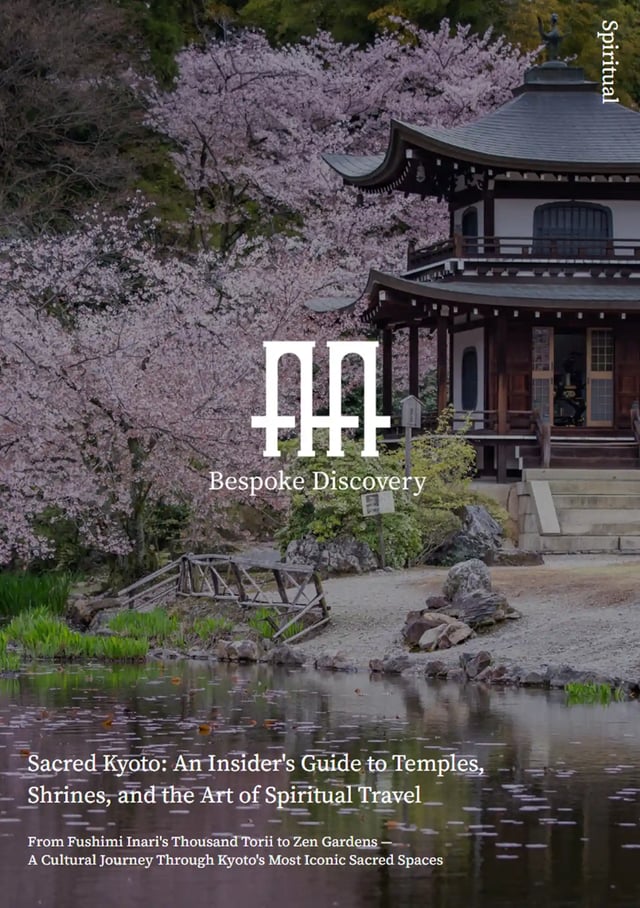
Sacred Kyoto: An Insider's Guide to Temples, Shrines, and the Art of Spiritual Travel
Digital Guide
Zen Spiritual

Sacred Kyoto: An Insider's Guide to Temples, Shrines, and the Art of Spiritual Travel

Kyoto's temples and shrines hold over a millennium of living culture—Zen gardens, vermilion torii, and sacred fox messengers. This guide decodes the philosophy behind Japan's most sacred city. From Fushimi Inari to goshuin culture and sustainable luxury, each chapter offers a deeper way to see.

Free, instant download. No spam — unsubscribe anytime.

What's Inside

01

Chapter 1 — Understanding Kyoto's Sacred Landscape — Temples, Shrines, and

02

Chapter 2 — Fushimi Inari-Taisha — The Architecture of Faith and the Fox's

03

Chapter 3 — Kyoto's Essential Temples — Zen, Wabi-Sabi, and the Aesthetics of

04

Chapter 4 — Goshuin — Sacred Stamps as Art, Memory, and Spiritual Practice

05

Chapter 5 — Immersive Experiences — Workshops, Rituals, and Cultural

06

Chapter 6 — Dining, Crafts, and the Culture Beyond the Gates

A Glimpse Inside

3 of the guide's 6 chapters, previewed.
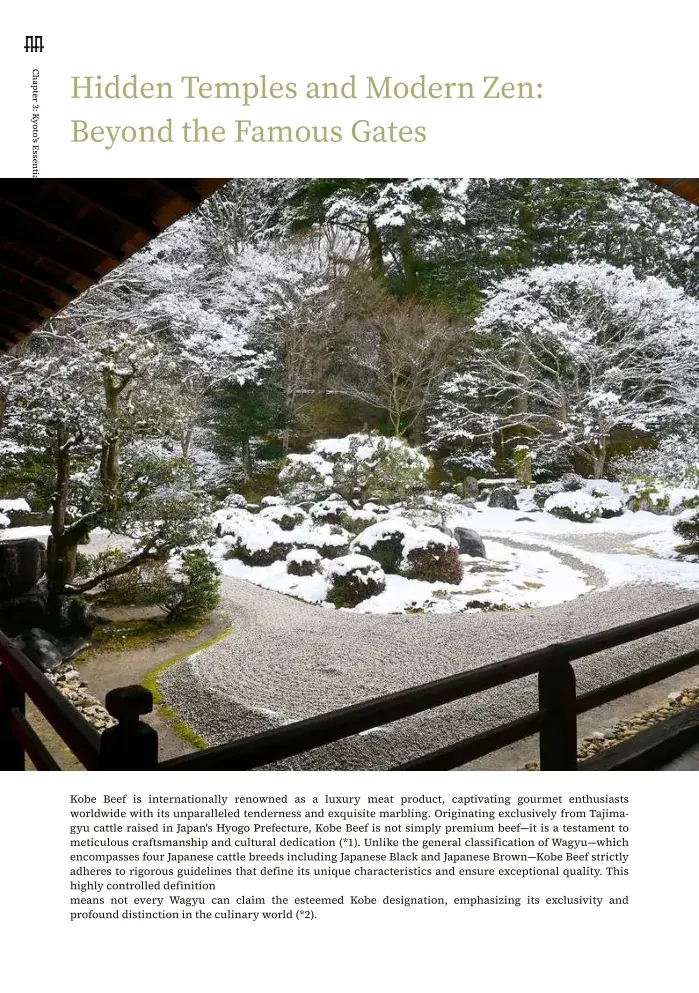
Chapter 3 — Kyoto's Essential Temples — Zen, Wabi-Sabi, and the Aesthetics of
03

Kyoto's Essential Temples — Zen, Wabi-Sabi, and the Aesthetics of

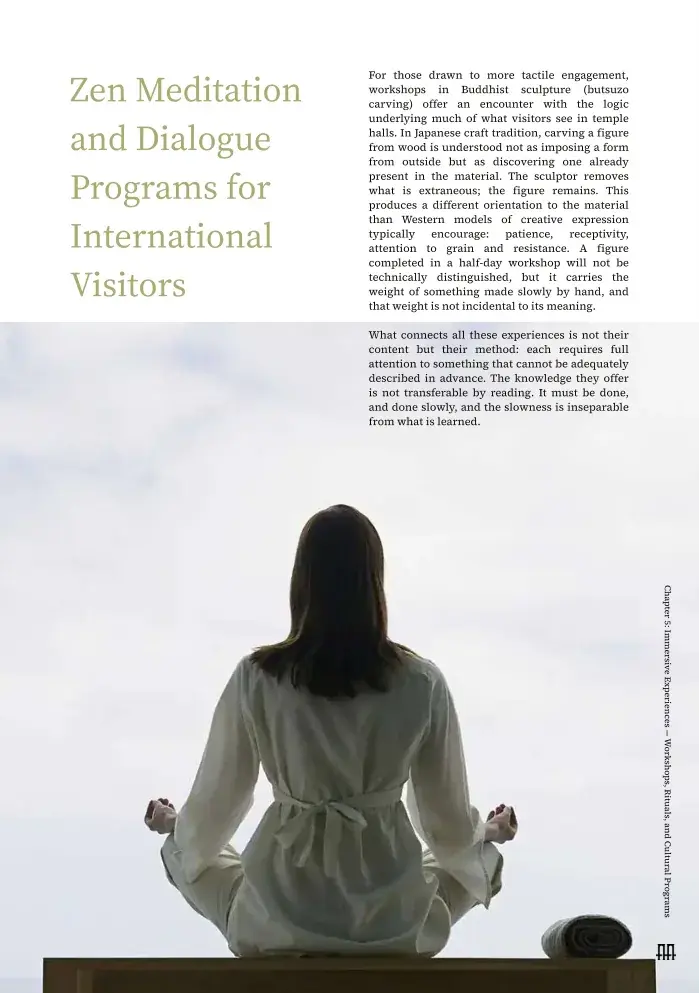
Chapter 5 — Immersive Experiences — Workshops, Rituals, and Cultural
05

Immersive Experiences — Workshops, Rituals, and Cultural

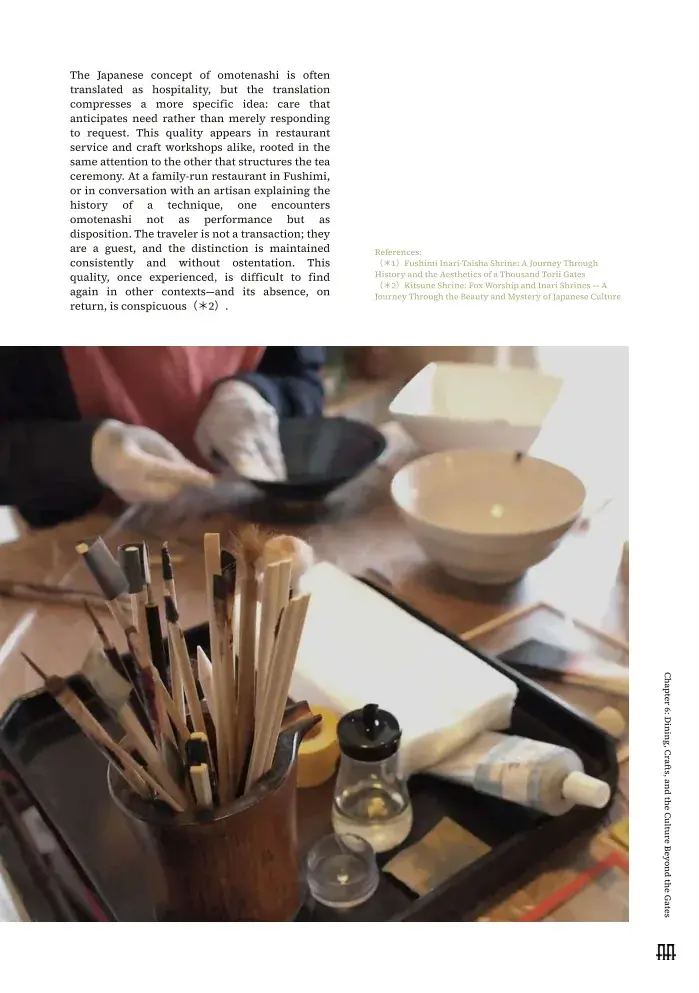
Chapter 6 — Dining, Crafts, and the Culture Beyond the Gates
06

Dining, Crafts, and the Culture Beyond the Gates

What Readers Say

I came to this guide expecting history. What I found was a philosophy. Each chapter moves with the quiet assurance of someone who understands that Japan's sacred spaces are not destinations but disciplines—ways of attending to the world. The section on ma and wabi-sabi articulated something I had felt but never named during my own visits to Kyoto. What lingers is not a list of temples but a shift

Damien Mory (Belgium)

What distinguishes this guide is its refusal to separate beauty from meaning. The sections on shojin ryori and the artisan workshops of Fushimi were particularly striking—here, sustainability is not a contemporary correction but a centuries-old logic embedded in how food is prepared, how craft is inherited, how water is understood as terroir. The concept of ie reframed for me what it means to purc

Alejandra Peral (Spain)

I have read widely about Japanese aesthetics, but this guide shifted the register. It moved me from admiration to something closer to comprehension. The explanation of chinju no mori as environmental stewardship rooted in reverence rather than calculation stayed with me long after reading—ancient wisdom arriving at the same conclusions as modern science through an entirely different route. The pas

Amanda Tan (Australia)
Free Download

Get the Guide

Tell us where to send it. The guide arrives by email, and nothing else follows unless you ask.

By downloading, you agree to receive occasional emails from Bespoke Discovery. Unsubscribe anytime.