background_Cultural

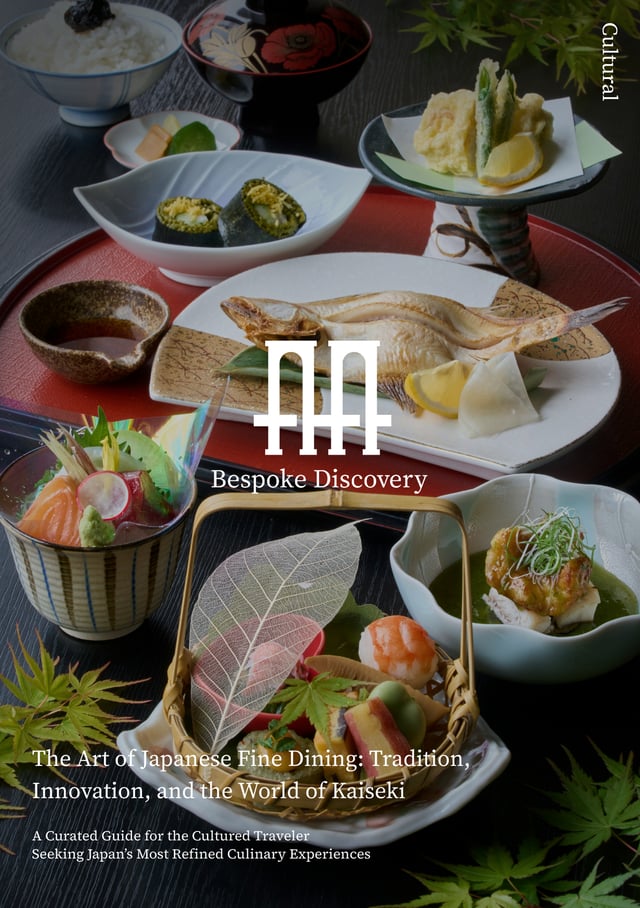
The Art of Japanese Fine Dining: Tradition, Innovation, and the World of Kaiseki

Food
This Digital Guide introduces Japanese fine dining as a cultural language shaped by history, seasonality, craftsmanship, and hospitality. Through kaiseki and washoku, it explores how cuisine reflects philosophy, aesthetics, and sustainability, offering cultured travelers a deeper way to understand Japan beyond taste alone.
The Art of Japanese Fine Dining: Tradition, Innovation, and the World of Kaiseki

Experiences You’ll Get from This Guide

This digital guide explores Japanese fine dining as a cultural experience, where cuisine, craftsmanship, and philosophy intersect. Centered on kaiseki, it reveals how seasonality, hospitality, and aesthetics shape each meal. Designed for culturally curious travelers, the guide offers insight into tradition, innovation, and sustainable luxury through food.

FineJapaneseCuisine_03

Kaiseki Origins: From Zen Hunger to Culinary Art

Discover how kaiseki emerged from Zen monastic practices and tea culture, evolving from humble nourishment into a refined culinary philosophy shaped by restraint, aesthetics, and meaning.

FineJapaneseCuisine_01

Zen, Tea, and the Birth of Kaiseki Aesthetics

Explore the philosophical roots of kaiseki through Zen Buddhism and Sen no Rikyū’s tea aesthetics, where simplicity, seasonality, and mindful design transformed meals into art.

JapaneseFineCuisine_03

Kaiseki’s Evolution: Simplicity, Banquets, and Cultural Dialogue

Trace kaiseki’s journey from tea ceremony meals to elaborate banquets, and uncover its dialogue with Renaissance Europe—revealing dining as a mirror of civilization itself.

Trusted Information

text text text text text text text text text text text text text text text text text text text text text text text text text text text text text text text text text text text text text text text text text.
tea ceremony master
Taro Yamada
Taro Yamad is an acclaimed Master of the Urasenke Tea Ceremony. He teaches the profound art of Chanoyu in Kyoto and shares the spirit of wabi-sabi globally through demonstrations and lectures.
tea ceremony master
Taro Yamada
Taro Yamad is an acclaimed Master of the Urasenke Tea Ceremony. He teaches the profound art of Chanoyu in Kyoto and shares the spirit of wabi-sabi globally through demonstrations and lectures.
tea ceremony master
Taro Yamada
Taro Yamad is an acclaimed Master of the Urasenke Tea Ceremony. He teaches the profound art of Chanoyu in Kyoto and shares the spirit of wabi-sabi globally through demonstrations and lectures.

Testimonials

Discover what readers from around the world are saying about our guides. Each comment reflects a unique journey into the heart of Japanese culture — from refined traditions and craftsmanship to the quiet beauty found in everyday rituals.

Reading this guide reframed Japanese fine dining for me from an aesthetic pleasure into a cultural language. Kaiseki emerged not as luxury for its own sake, but as a disciplined expression of Zen, seasonality, and human restraint. The way architecture, vessels, silence, and ingredients are woven together made me realize that a meal in Japan is closer to a philosophical encounter than a restaurant experience. What stayed with me most was the idea that sustainability and refinement are not modern add-ons, but values embedded for centuries. I finished the guide feeling better equipped not just to dine in Japan, but to read what is being quietly communicated at the table.

Robert Ward(USA)

This guide deepened my understanding of food as a mirror of civilization. I was struck by how Japanese fine dining expresses humility and attentiveness where Western traditions often celebrate abundance. Learning about the origins of kaiseki—from Zen hunger stones to Kyoto ryōtei—changed how I perceive small portions and minimalism: they are not restraint for show, but invitations to awareness. The sections on craftsmanship and tableware were especially illuminating, revealing how chefs and artisans speak a shared language. After reading, I no longer see Japanese cuisine as something to consume quickly, but as an experience that rewards patience, curiosity, and cultural literacy 

Damien Mory(Belgium)

What impressed me most was how seamlessly this guide connects history, ecology, and modern travel. The discussion of washoku and sustainability challenged my assumptions about “farm-to-table” as a Western innovation. In Japan, respect for seasonality and avoidance of waste feel instinctive rather than ideological. The guide also broadened my perspective on luxury: true refinement lies not in excess, but in responsibility, continuity, and care for context. By the end, I felt my role as a traveler subtly shift—from consumer to participant in a living cultural system. It’s rare for a culinary guide to leave you with ethical insight as well as appetite

Joshua Matthew (USA)

Sneak Peek Inside the Guide

You can read the first few pages as a preview.
To read the full version, please register using the form.
Scroll
Preview
Scroll
Preview