
Planning Japan for 2027? Speak to a travel designerReplies personally within three business days
The Art of Japanese Manners: A Complete Guide to Etiquette, Culture, and Refinement
Digital Guide
Other Cultural

The Art of Japanese Manners: A Complete Guide to Etiquette, Culture, and Refinement

Japanese etiquette is a living philosophy rooted in harmony and respect. This guide decodes the customs shaping daily life in Japan: dining rituals, chopstick technique, onsen conduct, shrine visits, train manners, and gift-giving. A culturally rich companion for travelers seeking Japan beyond the surface.

Free, instant download. No spam — unsubscribe anytime.

What's Inside

01

Chapter 1 — The Philosophy Behind Japanese Etiquette

02

Chapter 2 — The Art of Dining — Food Culture and Table Manners

03

Chapter 3 — Mastering Chopsticks — From Technique to Meaning

04

Chapter 4 — The Onsen Experience — Rules, Rituals, and Refinement

05

Chapter 5 — Sacred Spaces — Etiquette at Shrines, Temples, and Hatsumode

06

Chapter 6 — Moving Through Japan — Trains, Public Spaces, and Urban

07

Chapter 7 — Gifts, Greetings, and the Language of Respect

A Glimpse Inside

3 of the guide's 7 chapters, previewed.
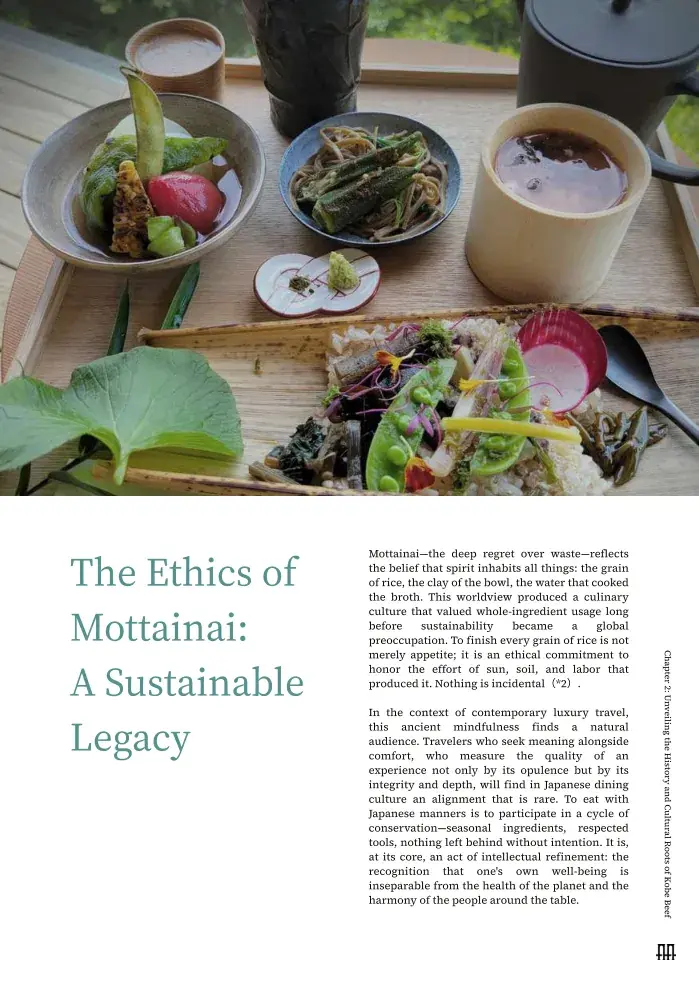
Chapter 2 — The Art of Dining — Food Culture and Table Manners
02

The Art of Dining — Food Culture and Table Manners

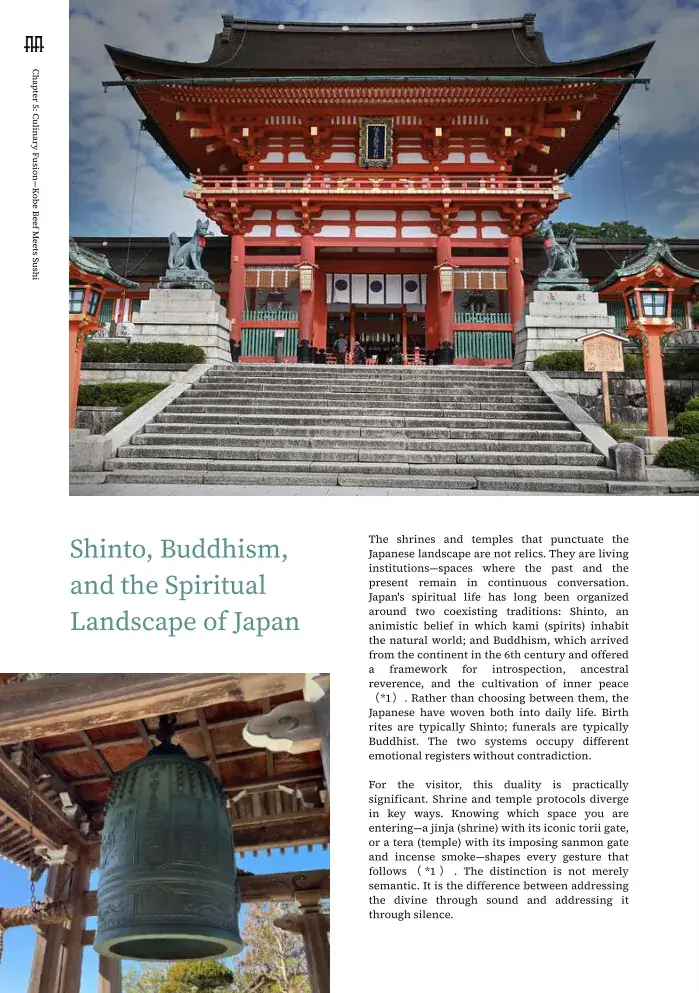
Chapter 5 — Sacred Spaces — Etiquette at Shrines, Temples, and Hatsumode
05

Sacred Spaces — Etiquette at Shrines, Temples, and Hatsumode

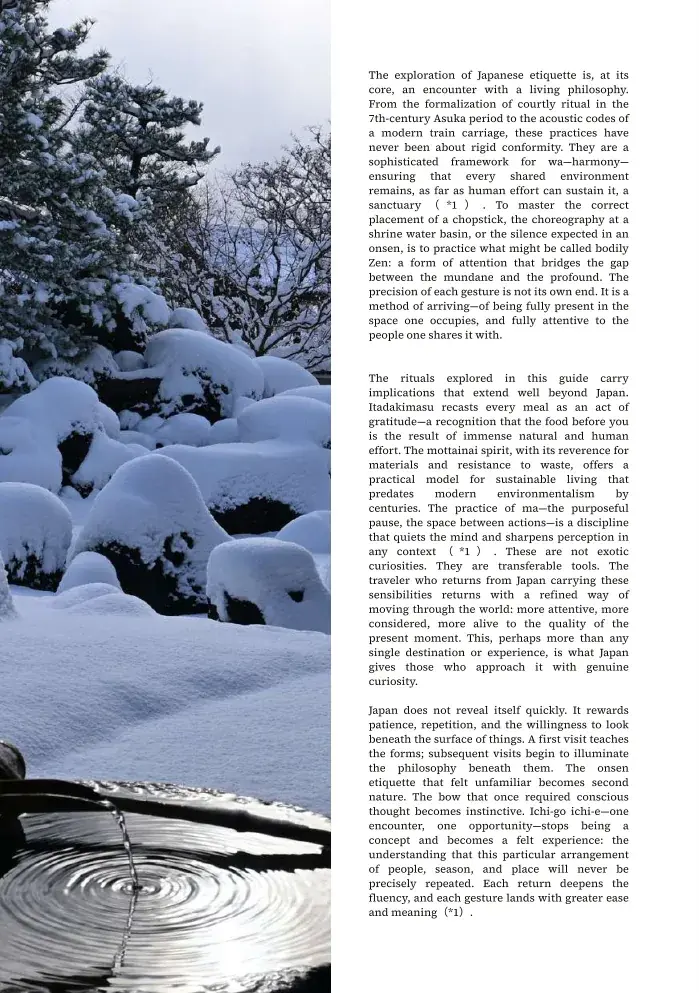
Chapter 1 — The Philosophy Behind Japanese Etiquette
01

The Philosophy Behind Japanese Etiquette

What Readers Say

This guide does not merely explain etiquette—it initiates the reader into a different relationship with time. Reading it, I was struck by how Japanese manners encode a philosophy of presence: the pause before lifting chopsticks, the silence held in a bathhouse, the bow that asks nothing in return. Where Western cultures tend to rush toward outcomes, Japan invests meaning in the interval. What I ta

Damien Mory (Belgium)

What separates this guide from conventional travel writing is its insistence on context. The chopstick is not merely a utensil—it is the product of a culinary culture built around the delicacy of fish and the refinement of the hand. The lacquerware is not merely beautiful—it is designed to be repaired, to outlast its owner. Every custom documented here carries an ecological conscience that predate

Alejandra Peral (Spain)

I came to this guide knowing something of Japanese etiquette. I left it understanding why it exists. The distinction matters. Once you grasp that the bow originated as an act of absolute trust—that lowering your head before another person was a declaration of vulnerability—every subsequent gesture takes on a different weight. This guide reframed my understanding not through instruction but through

Amanda Tan (Australia)    
Free Download

Get the Guide

Tell us where to send it. The guide arrives by email, and nothing else follows unless you ask.

By downloading, you agree to receive occasional emails from Bespoke Discovery. Unsubscribe anytime.