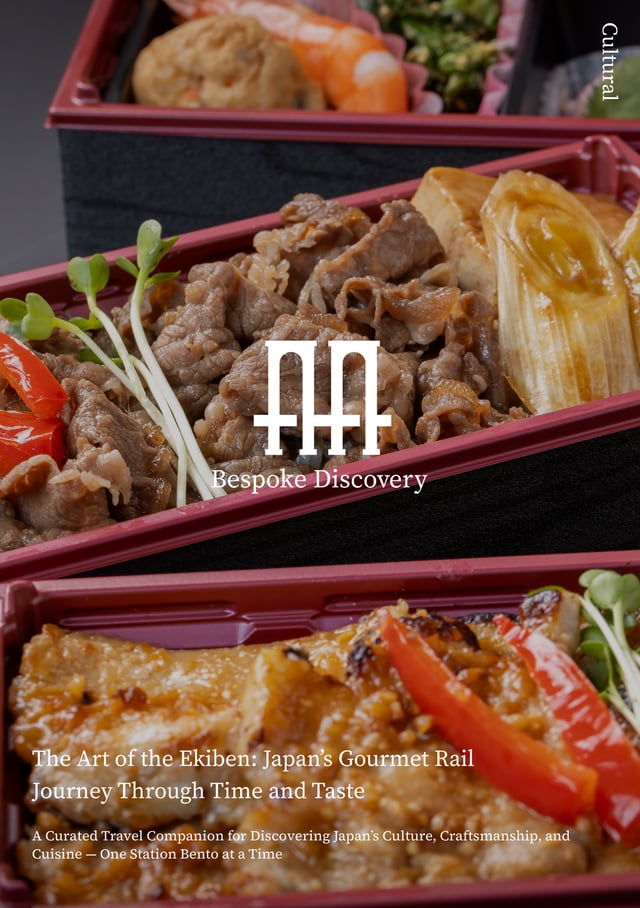
The Art of the Ekiben: Japan’s Gourmet Rail Journey Through Time and Taste
Experiences You’ll Get from This Guide
This digital guide explores Japan’s ekiben—station bento boxes—as cultural artifacts shaped by history, regional identity, and craftsmanship. Through food, design, and ritual, it reveals how a simple train meal becomes a refined expression of Japanese aesthetics, mindfulness, and travel philosophy
The Birth of Ekiben
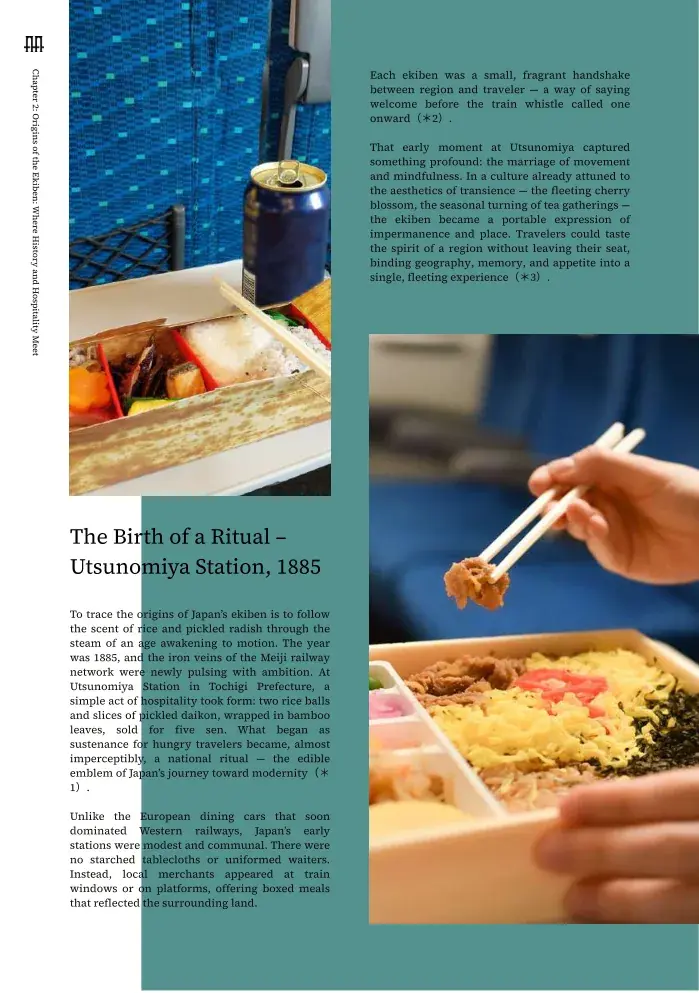
Discover how ekiben began in 1885 as a simple act of hospitality at Utsunomiya Station, evolving into a national ritual that blends travel, taste, and mindfulness.
Meiji Rails & Japanese Aesthetics
Explore how Japan transformed Western railway technology into a uniquely refined culture, where ekiben expressed wabi-sabi, regional pride, and everyday beauty.
Local Pride, One Box at a Time
From ceramic pots to illustrated wrappers, learn how regional ekiben became edible symbols of place, allowing travelers to taste Japan’s diversity station by station.
Trusted Information
Testimonials
Discover what readers from around the world are saying about our guides. Each comment reflects a unique journey into the heart of Japanese culture — from refined traditions and craftsmanship to the quiet beauty found in everyday rituals.
Reading this guide reframed ekiben from a charming travel detail into a sophisticated cultural system. What struck me most was the depth of craftsmanship—how potters, farmers, and cooks collaborate across generations to express regional identity through a single meal. The historical narrative, rooted in Meiji-era modernization, revealed ekiben as both democratic luxury and cultural pedagogy. This was not food as spectacle, but food as a quietly disciplined craft, shaped by time, place, and human care. It left me more attentive—not only to what I eat while traveling in Japan, but to whose hands shaped that experience.
This guide offered one of the most elegant interpretations of sustainability I have encountered in travel literature. Rather than presenting ecology as obligation, it situates sustainable ekiben design as a natural extension of omotenashi and regional responsibility. The stories of biodegradable packaging, local supply networks, and revived crafts illustrated how tradition evolves without rupture. I came away understanding that Japanese sustainability is not performative—it is embedded, tactile, and quietly ethical. The ekiben becomes a lesson in “slow luxury,” where environmental care, social continuity, and aesthetic restraint are inseparable.
What lingered after reading was not a list of places or foods, but a philosophy of travel. The ekiben emerged as a cultural narrative device—compressing geography, seasonality, and memory into a fleeting yet meaningful encounter. The guide’s reflections on impermanence, ritual, and mindful consumption resonated deeply with how I seek to travel today. Each chapter suggested that understanding Japan is less about accumulation and more about attunement. This book does not encourage you to consume Japan—it teaches you how to listen, slowly, through taste.
Sneak Peek Inside the Guide
To read the full version, please register using the form.