background_Anniversary

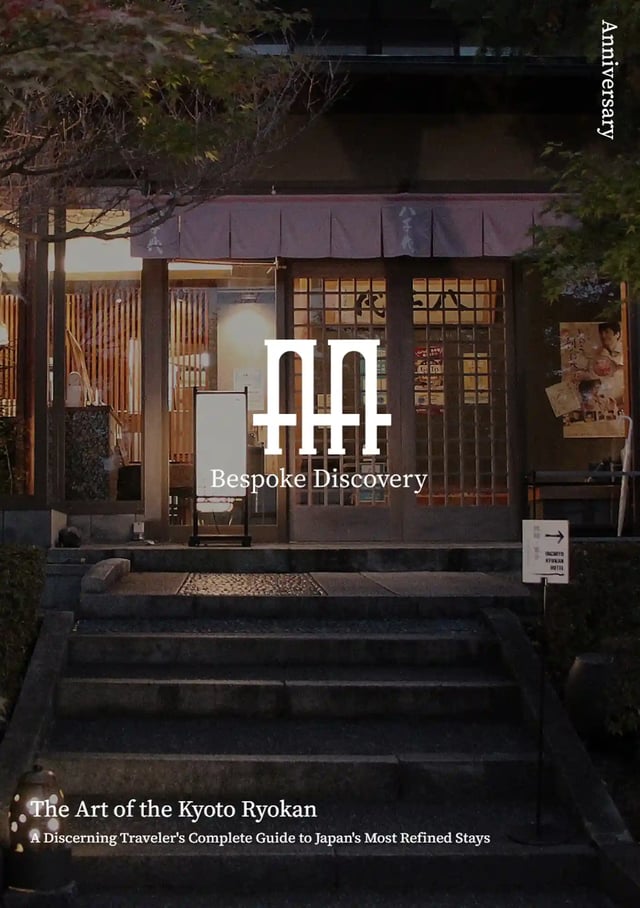
The Art of the Kyoto Ryokan — A Discerning Traveler's Complete Guide to Japan's Most Refined Stays

Kyoto Hotel Ryokan
Kyoto's finest ryokan are living archives of Japanese aesthetics, philosophy, and craft. This guide covers sukiya architecture, shakkei gardens, kaiseki dining, tea ceremony, artisan encounters, sustainable traditions, and etiquette — everything a culturally engaged traveler needs for an exceptional stay.
The Art of the Kyoto Ryokan — A Discerning Traveler's Complete Guide to Japan's Most Refined Stays

Experiences You’ll Get from This Guide

A Kyoto ryokan is where a thousand years of Japanese aesthetic intelligence becomes your daily environment. This guide unlocks that world: the philosophy of ma and omotenashi, kaiseki dining, tea ceremony, artisan encounters, and sustainable luxury — giving you the depth to inhabit Kyoto's finest inns fully.

The Art of the Kyoto Ryokan_01

The Art of Welcome

At a ryokan's threshold, omotenashi begins before a word is spoken. This guide decodes the hospitality ahead — its cultural roots and quiet discipline.

The Art of the Kyoto Ryokan_02

A Season on the Table

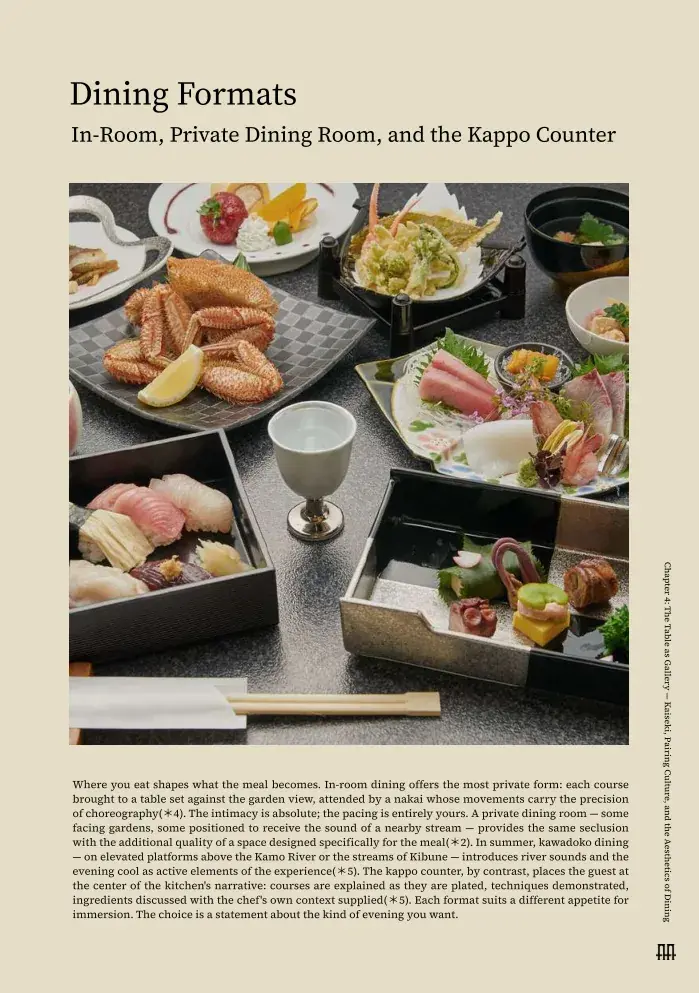
Kyo-kaiseki is a sequence of seasonal argument — each course chosen for its moment, each vessel to frame it. This guide explains the logic behind the meal.

The Art of the Kyoto Ryokan_03

Behind the Closed Door

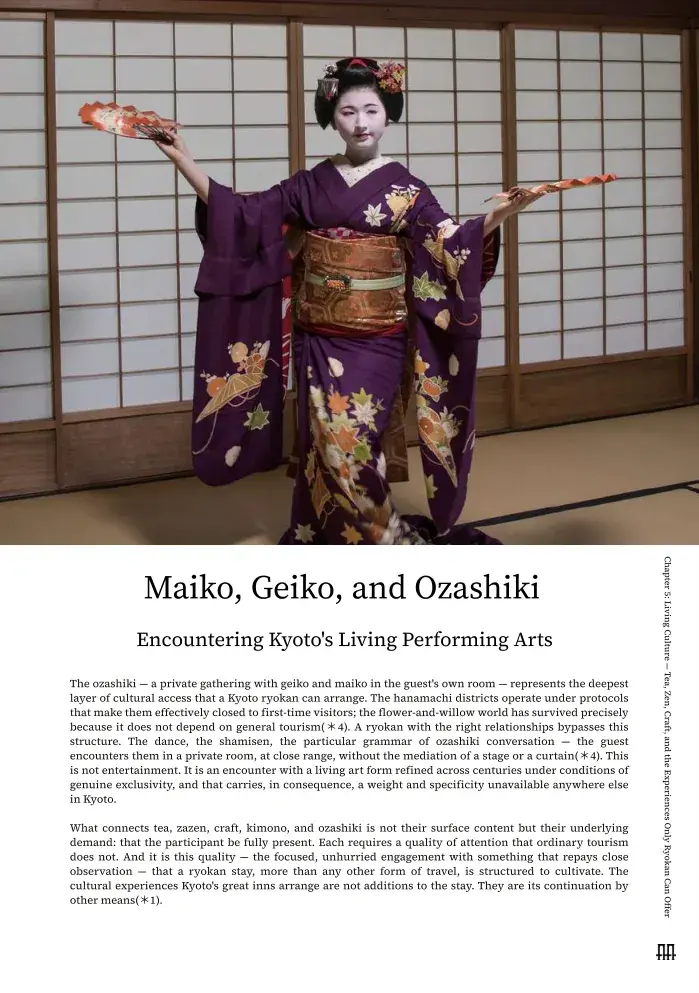
Kyoto's hanamachi world is not open to the general visitor. A ryokan with the right networks changes that. This guide shows how — and what awaits within.

Trusted Information

text text text text text text text text text text text text text text text text text text text text text text text text text text text text text text text text text text text text text text text text text.
tea ceremony master
Taro Yamada
Taro Yamad is an acclaimed Master of the Urasenke Tea Ceremony. He teaches the profound art of Chanoyu in Kyoto and shares the spirit of wabi-sabi globally through demonstrations and lectures.
tea ceremony master
Taro Yamada
Taro Yamad is an acclaimed Master of the Urasenke Tea Ceremony. He teaches the profound art of Chanoyu in Kyoto and shares the spirit of wabi-sabi globally through demonstrations and lectures.
tea ceremony master
Taro Yamada
Taro Yamad is an acclaimed Master of the Urasenke Tea Ceremony. He teaches the profound art of Chanoyu in Kyoto and shares the spirit of wabi-sabi globally through demonstrations and lectures.

Testimonials

Discover what readers from around the world are saying about our guides. Each comment reflects a unique journey into the heart of Japanese culture — from refined traditions and craftsmanship to the quiet beauty found in everyday rituals.

What this guide does exceptionally well is connect the visible to the invisible. A bowl of kaiseki is not just food — it is the end point of a supply chain rooted in seasonal ethics, a ceramicist's kiln, and centuries of culinary philosophy. The chapters on mottainai and sustainable practice reframed my understanding of luxury entirely: not what is spent, but what is preserved. This is travel writing that takes craftsmanship seriously — and in doing so, honors the people who keep these traditions alive.


Alejandra Peral (Spain)

Before reading this guide, I admired Japanese culture from the outside. After, I understand it from within. What struck me most was how qualities I had vaguely associated with Japan — patience, restraint, attentiveness — are not personality traits but architectural decisions, encoded into every room, every garden, every course of a kaiseki meal. The sections on ma and mottainai reframed my understanding entirely. This is a guide that teaches you to see differently, and the effect stays long after the reading is done.

Amanda Tan(Australia)

What separates this guide from travel writing is its willingness to make a philosophical argument. Western hospitality optimizes for preference; Japanese ryokan hospitality, as this guide explains it, optimizes for attention — training the guest to perceive more finely rather than simply delivering comfort. The contrast illuminated something I had never articulated about my own culture's assumptions. Ichi-go ichi-e is not a sentiment. It is an ethics. I left this guide with genuine respect for a civilization that built those ethics into the architecture of a room.

Robert Ward (USA)

Sneak Peek Inside the Guide

You can read the first few pages as a preview.
To read the full version, please register using the form.
Scroll
Preview
Scroll
Preview