Before reading this guide, I admired Japanese culture from the outside. After, I understand it from within. What struck me most was how qualities I had vaguely associated with Japan — patience, restraint, attentiveness — are not personality traits but architectural decisions, encoded into every room, every garden, every course of a kaiseki meal. The sections on ma and mottainai reframed my understanding entirely. This is a guide that teaches you to see differently, and the effect stays long after the reading is done.
The Discerning Traveler's Guide to Tokyo Day Trips
Experiences You’ll Get from This Guide
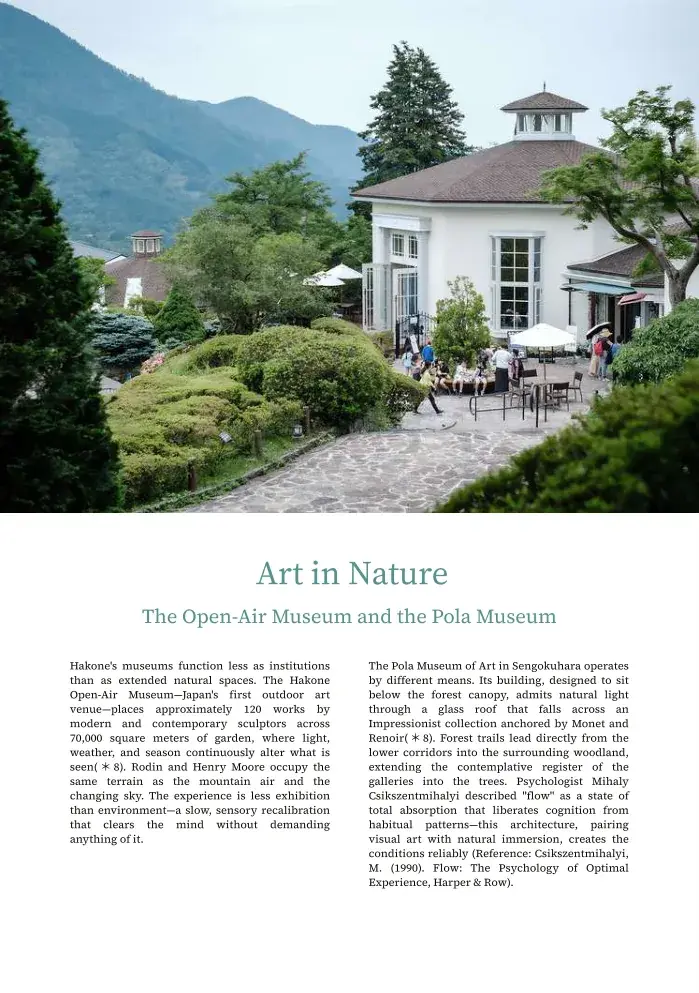
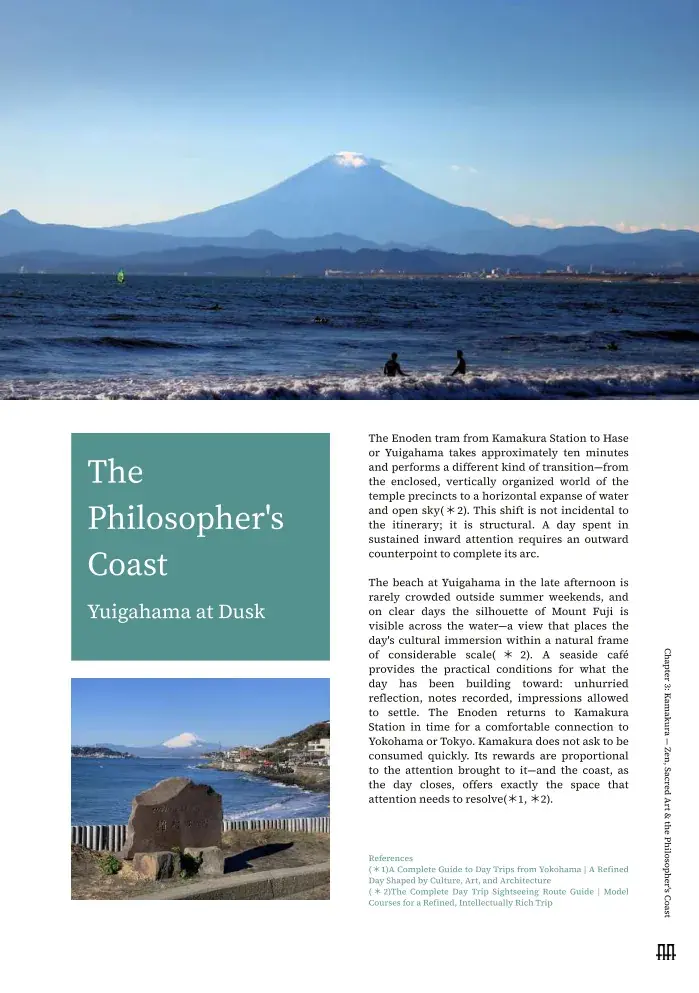
Tokyo is a gateway, not just a destination. Within a single day, three distinct worlds become accessible: Hakone, where forest and mineral spring restore what city life depletes; Kamakura, where Zen stillness and devotional cuisine offer rare depth; and Yokohama, where a century of cultural exchange shaped an aesthetic unlike anywhere else in Japan. This guide is built for travelers who measure a journey by what it leaves behind.
Where the City Meets the Sea
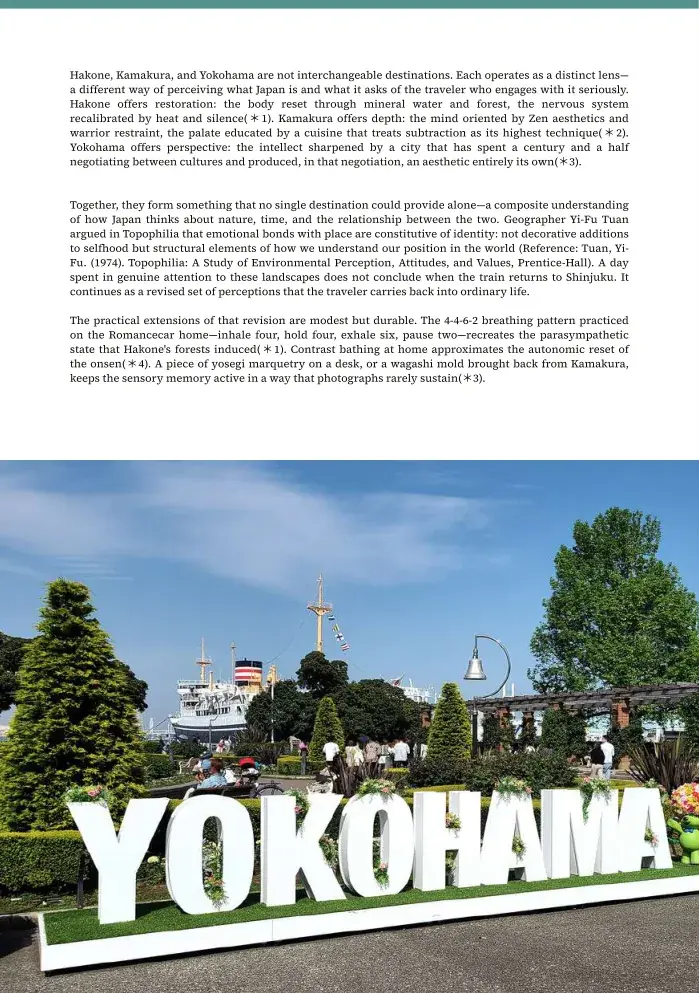
Yokohama rewards those who stay past sunset. A port city shaped by a century and a half of cultural exchange, it offers waterfront architecture, a golden hour unlike anywhere in Japan, and an evening that lingers long after the lights come on.
The Season, Served
Kaiseki is not a meal—it is an argument about time. Each course reflects what the land offers at this precise moment of the year. In Hakone and Kamakura, that conversation is inseparable from the water, the soil, and the hands that prepare it.
Stillness as a Practice
Kamakura's cultural depth is not decorative. The Zen temples, the sacred art, the warrior aesthetics—each element asks for genuine attention. A single day here, approached with intention, returns something that longer itineraries rarely provide: clarity.
Trusted Information
Testimonials
Discover what readers from around the world are saying about our guides. Each comment reflects a unique journey into the heart of Japanese culture — from refined traditions and craftsmanship to the quiet beauty found in everyday rituals.
This guide does not rush. It breathes. Reading it felt like standing at the threshold of three different Japan's—each one asking for a different kind of attention. What struck me most was how the text holds time gently: the cedar avenue that once carried Edo-period travelers, the karesansui garden that stills the mind without explanation, the golden hour at Osanbashi that needs no words. For anyone who travels to understand rather than to collect, this is a rare thing—a guide that itself embodies the culture it describes.
Okay, I was not expecting to feel this much reading a travel guide?? The way it's written—clean, smart, never overwhelming—made me want to book a ticket immediately. Hakone's forest bathing, the wagashi described like edible poetry, Yokohama at golden hour. Every section felt like it was designed, not just written. Whoever created this clearly loves Japan and knows exactly how to share that love without losing the elegance. Genuinely one of the most beautiful pieces of travel content I've come across. More please.
Sneak Peek Inside the Guide
To read the full version, please register using the form.