background_Spiritual

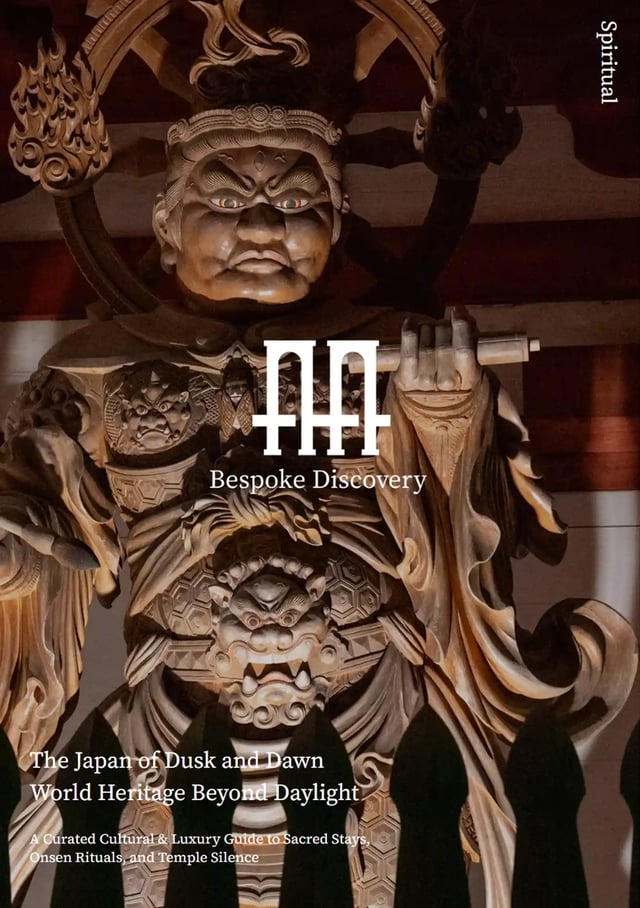
The Japan of Dusk and Dawn World Heritage Beyond Daylight

Discover a quieter Japan through sacred World Heritage sites experienced beyond daylight. This curated guide explores Nikko, Miyajima, and Mount Koya through stays, rituals, and nature, revealing how stillness, culture, and mindful travel transform sightseeing into a deeper, living encounter.
The Japan of Dusk and Dawn World Heritage Beyond Daylight

Experiences You’ll Get from This Guide

This guide invites you to experience Japan’s World Heritage sites not as places to visit, but as places to stay and feel. By exploring Nikko, Miyajima, and Mount Koya beyond daylight, you’ll discover how ritual, nature, and stillness transform travel into a deeper cultural and personal journey.

The Japan of Dusk and Dawn World Heritage Beyond Daylight_01

Japan Beyond Daylight

Explore Japan’s sacred World Heritage sites after dusk and at dawn, where silence, ritual, and nature reveal a deeper cultural experience.

The Japan of Dusk and Dawn World Heritage Beyond Daylight_02

Sacred Japan: A Journey of Stillness

Discover Nikko, Miyajima, and Mount Koya through immersive stays, onsen rituals, and temple life that transform travel into inner clarity.

The Japan of Dusk and Dawn World Heritage Beyond Daylight_03

The Art of Staying in Japan

Go beyond sightseeing and experience Japan through overnight stays, quiet moments, and cultural rituals that connect you to living heritage.

Trusted Information

text text text text text text text text text text text text text text text text text text text text text text text text text text text text text text text text text text text text text text text text text.
tea ceremony master
Taro Yamada
Taro Yamad is an acclaimed Master of the Urasenke Tea Ceremony. He teaches the profound art of Chanoyu in Kyoto and shares the spirit of wabi-sabi globally through demonstrations and lectures.
tea ceremony master
Taro Yamada
Taro Yamad is an acclaimed Master of the Urasenke Tea Ceremony. He teaches the profound art of Chanoyu in Kyoto and shares the spirit of wabi-sabi globally through demonstrations and lectures.
tea ceremony master
Taro Yamada
Taro Yamad is an acclaimed Master of the Urasenke Tea Ceremony. He teaches the profound art of Chanoyu in Kyoto and shares the spirit of wabi-sabi globally through demonstrations and lectures.

Testimonials

Discover what readers from around the world are saying about our guides. Each comment reflects a unique journey into the heart of Japanese culture — from refined traditions and craftsmanship to the quiet beauty found in everyday rituals.

Reading this guide felt less like planning a trip and more like being gently reoriented. As a Western traveler, I’m accustomed to approaching heritage as something to observe and interpret. Here, I was reminded that in Japan, culture is something you enter, patiently and with humility. The emphasis on stillness, ritual, and continuity revealed a worldview shaped by restraint and harmony rather than display. What stayed with me most was the quiet discipline underlying every experience—the sense that beauty emerges not from excess, but from attention. It deepened not only my understanding of Japan, but my sense of what meaningful travel can be.

Robert Ward (USA)

This guide transformed the way I think about food in Japan. It revealed that taste is not just flavor, but context—ritual, seasonality, and the quiet precision of craftsmanship. Understanding the philosophy behind onsen, temple cuisine, and regional traditions made me want to slow down and truly engage. I found myself planning not just where to eat, but when to arrive, how to prepare, even how to sit and observe. The result is a more layered pleasure—where each bite carries meaning. It has shifted my travel habits toward depth, intention, and a deeper respect for the cultural rhythms that shape every dish.

Amanda Tan (Australia)

What moved me most was how this guide connected sensory pleasure with cultural awareness. It made me realize that Japan’s culinary experiences are inseparable from their environments—forests, water, silence, and time. Learning about these relationships didn’t just inform me; it changed my behavior. I now seek out places where I can stay longer, wake early, and experience meals as part of a wider rhythm. Even something as simple as a bowl of tofu or seasonal vegetables feels elevated when you understand the discipline and philosophy behind it. This guide turns curiosity into action, and knowledge into a richer, more intentional journey.

Helena Joe (USA)

Sneak Peek Inside the Guide

You can read the first few pages as a preview.
To read the full version, please register using the form.
Scroll
Preview
Scroll
Preview