

Planning Japan for 2027? Speak to a travel designerReplies personally within three business days
The Sacred Path: A Sophisticated Traveler's Guide to Japan's Shrine Culture and Shinto Spirituality
Digital Guide
Other Spiritual

The Sacred Path: A Sophisticated Traveler's Guide to Japan's Shrine Culture and Shinto Spirituality

Discover Japan's sacred Shinto shrines through this luxury travel guide. Explore architectural beauty, fox worship symbolism, seasonal festivals, and wellness practices. From Fushimi Inari's thousand torii gates to Meiji Jingu's urban forest, experience cultural immersion and personal transformation.

Free, instant download. No spam — unsubscribe anytime.

What's Inside

01

Chapter 2 — The Sacred Architecture of Japanese Shrines

02

Chapter 3 — Iconic Shrine Destinations—From Kyoto to Tokyo

03

Chapter 4 — The Art and Symbolism of Fox Worship at Inari Shrines

04

Chapter 5 — Festivals, Annual Rites, and the Rhythm of Sacred Time

05

Chapter 6 — Wellness, Mindfulness, and Personal Transformation

06

Chapter 1 — Understanding Shinto—Japan's Living Spiritual Philosophy

A Glimpse Inside

3 of the guide's 6 chapters, previewed.
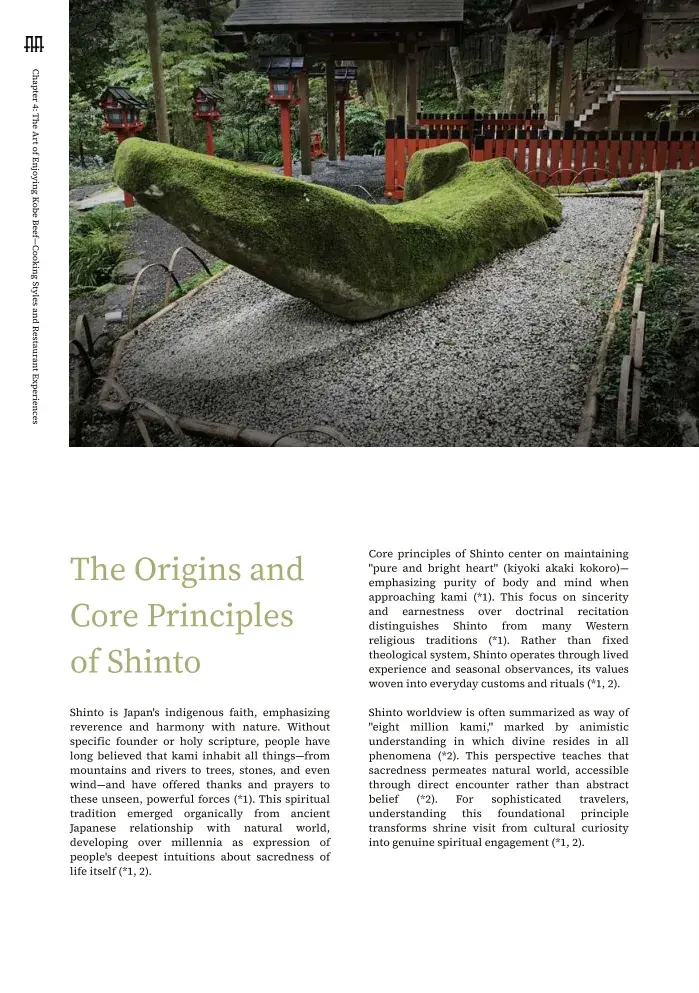
Chapter 4 — The Art and Symbolism of Fox Worship at Inari Shrines
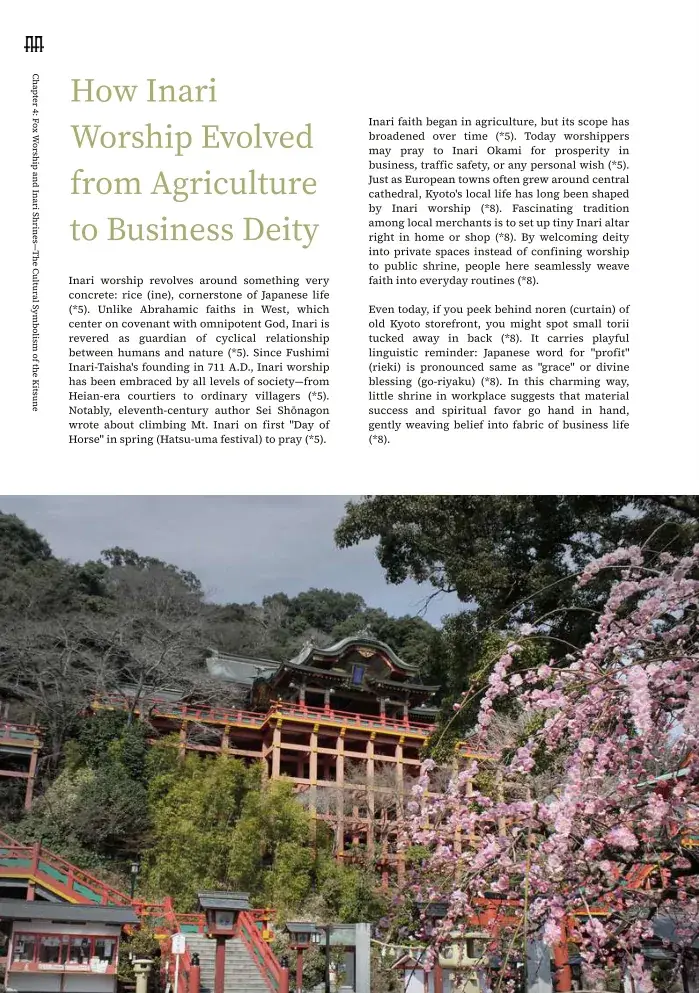
04

The Art and Symbolism of Fox Worship at Inari Shrines
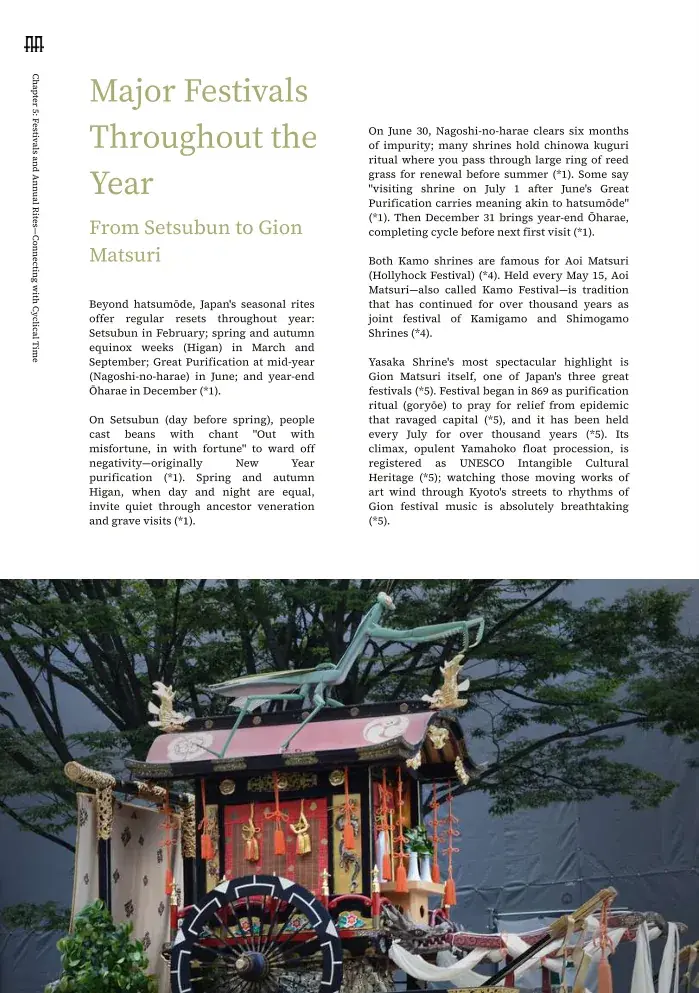
Chapter 4 — The Art and Symbolism of Fox Worship at Inari Shrines
04

The Art and Symbolism of Fox Worship at Inari Shrines

Chapter 5 — Festivals, Annual Rites, and the Rhythm of Sacred Time
05

Festivals, Annual Rites, and the Rhythm of Sacred Time

What Readers Say

This guide reads like a meditation on sacred time itself. Where Western cathedrals thrust skyward in stone permanence, these shrine forests breathe with cyclical renewal—tokowaka, the eternal youth of letting go. The authors reveal how vermilion gates and water basins are not mere symbols but somatic technologies of transformation. I'm struck by the elegance of hare and ke, that profound recogniti

Damien Mory (Belgium)

What distinguishes this guide is its clear-eyed articulation of fundamental differences in spiritual architecture. Where Western tradition builds monuments to transcendence, Shinto shrines cultivate immanence—the divine dwelling in grain patterns and forest silence. The authors expertly contrast our covenant-based theology with Japan's partnership model, where kami adapt to human needs rather than

Robert Ward (USA)

This guide elevated my understanding beyond gastronomy into cultural archaeology. Each chapter peeled back layers—how Edo-period water systems shaped tofu refinement, how MSC certifications dialogue with centuries-old mottainai philosophy, how a tuna auctioneer's hand signals encode generations of embodied knowledge. I'd toured markets before, but never understood them as palimpsests where sustain

Alejandra Peral (Spain)
Free Download

Get the Guide

Tell us where to send it. The guide arrives by email, and nothing else follows unless you ask.

By downloading, you agree to receive occasional emails from Bespoke Discovery. Unsubscribe anytime.